Image
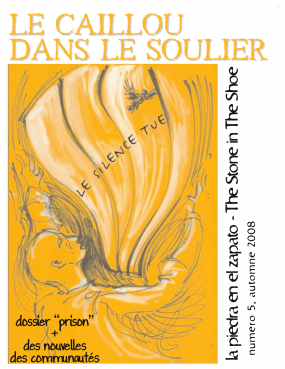
Éditorial La criminalisation de la dissidence : nouvelle étape stratégique de la guerre sécuritaire La stratégie de guerre sécuritaire menée par l’État colombien est entrée dans une nouvelle phase.
Read more
Christina Friederika Muller deported from Colombia. Investigator with Masters in Communications We, the below signed organisations, members of the Network of Solidarity and Friendship with Colombia denounce to the national and international community the deportation from Colombia of Christina Friederika Muller, a German citizen who was providing accompaniment to Human Rights Organisations. We categorically reject this arbitary and unjust actions carried out by the Colombian Security Service (DAS) in the city of Cali.
Read more
After facing the police's bullets, and suffering one death and 122 serious injuries, the Minga of Social and Communitarian Resistance finally gets President Uribe to agree to a public debate in La Maria Indigenous Reserve, Piendamo, Cauca department, Colombia on 2nd November 2008. Minga leader and head of the Cauca Regional Indigenous Council Aida Quilcue gives this emotional, inspirational speech, live on national television and addressing President Uribe and his cabinet directly.
Read more
Threats from recent days have become actions Strangers have entered the humanitarian zones under the cover of night A member of Justicia y Paz was kidnapped for 1.5 hours. The situation has never been so disturbing in the past several months. PASC member Tania Hallé is still on the ground with the communities.
Read more
http://www.ipsnews.net/news.asp?idnews=43813
Read more
Since the beginning of the decade, all the areas of expansion of oil palm plantations have coincided geographically with areas of paramilitary presence and expansion, to the extent that some of the new plantations being developed have been financed as farming projects for the same demobilised paramilitary from the AUC (Autodefensas Unidas de Colombia – United Self-Defence Force of Colombia) who had previously made incursions into these very areas.
Read more
People's Permanent Tribunal Colombia Session :Transnational corporations and crimes against humanity
Background of Peoples' Tribunal: The Permanent Peoples' Tribunal is an international independent tribunal that examines and judges complaints regarding violations of human rights that have been submitted by the victims. The Tribunal was founded in June 1979 in Italy by legal experts, writers and other intellectuals.
Read more
In 2003, the United Nations High Commissioner for Human Rights pointed out that the human rights situation in Colombia “is characterized by serious, massive, and systematic violations of those rights, many of them constituting crimes against humanity.”1 Five years later, the violations remain serious, massive, and systematic. In many cases they have worsened, and in great part remain unpunished. The responsibility for these violations in the majority of cases is attributed to the Colombian State, as a result of direct perpetration or of tolerance or support of the paramilitary groups.
Read more
400 YEARS OF MILITARISM AND COLONIALISM : NOTHING TO CELEBRATE! FROM KABUL TO QUEBEC CITY: NO JUSTICE ON STOLEN AND OCCUPIED LAND +++++++++++++++ Protest the parade of Canadian Armed Forces soldiers in the Old City of Quebec; Canada out of Afghanistan!
Read more
“Marmato: your coveted gold is the source of riches for strangers—and the cause of misery for yourselves.” —Old Marmateño saying.
Read more